Tutankhamun Under Glass
Author: Dr. Anirban Sadhu
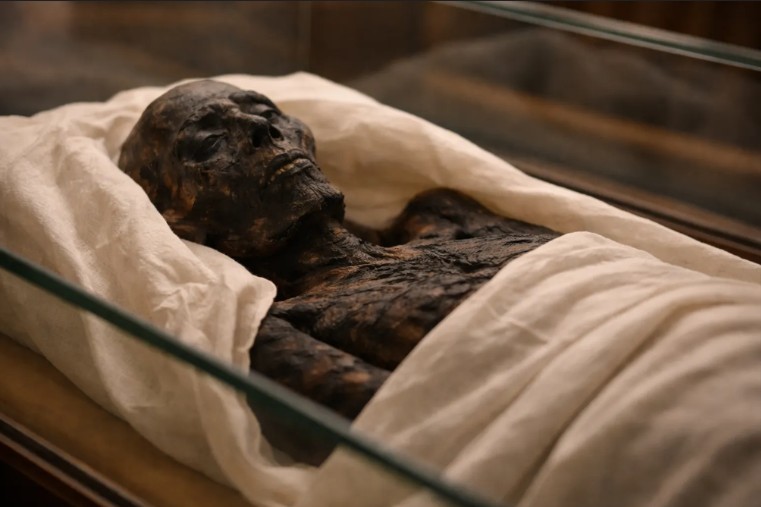
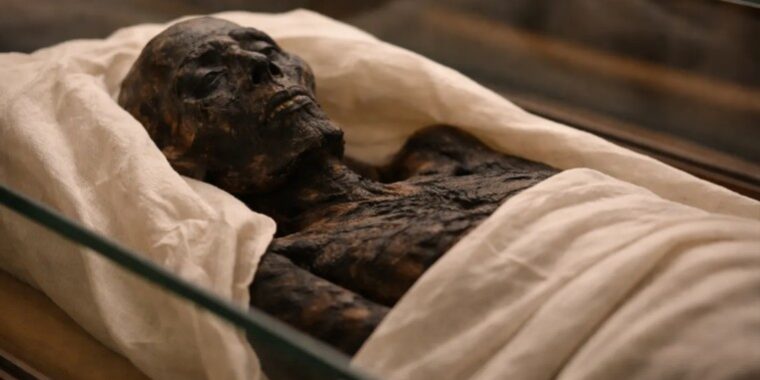
He lies not now in gold, but under glass.
No longer crowned, no longer veiled in art,
But blackened to the measure of the grave —
A shrunken relic of the human part.
The skin, once warmed by breath, is drawn and dry;
The face has lost its argument with time.
The mouth, half-open, holds no further claim —
A broken arch no splendour can refine.
And this was he for whom a kingdom poured
Its wealth into the chambers of the dead:
Gold beyond counting, lapis, cedar, myrrh —
A radiant world to house a silent head.
They sealed him deep, they armed him for the dark,
They built his afterlife in measured stone,
As if the craft of men, however vast,
Could purchase for the flesh a longer throne.
But death does not negotiate with gold.
It does not pause before a painted lid.
It does not weigh the treasure in the tomb.
It enters — quietly — and does what it always did.
What is a king now? Bone beneath the skin.
What is a crown? A memory of light.
What is dominion? Dust arranged in time.
What is the body? Matter losing fight.
Around him moves the living, finely dressed —
Soft fabrics, colour, perfume, passing grace.
A hand adjusts a strand of careful hair;
A camera studies what has lost its face.
They come, they look, they turn, they speak, they go.
The living keep their bright, unbroken air.
And he remains, half-covered, half-exposed —
A lesson none will carry long, though there.
For all that shines will one day enter this:
The poised, the praised, the beautiful, the strong.
No fabric holds. No ornament persuades.
No youth delays the body’s yielding long.
The gold survives more faithfully than flesh.
The mask keeps better vigil than the man.
The crafted thing outlives the living form —
So ends, in silence, every human plan.
And yet the deepest pathos is not this —
Not that he died, nor even that he decayed —
But that he lies now open to the gaze
Of those for whom no such defence is made.
A king, once hidden from the common eye,
Now rests beneath the curiosity of all.
His final privacy undone by time,
His last enclosure turned a public hall.
So stands the truth, austere and difficult:
That nothing we assemble will suffice.
No wealth, no name, no careful work of hands
Will purchase from the dark a different price.
He lies not there as wonder, but as proof.
Not as exception, but as measured end.
And each who leaves him carries, unannounced,
The quiet knowledge he cannot defend:
That what we pity, sealed in ancient glass,
Is not another’s fate — it is our class.
The gold was vast. The burial was deep.
Yet death required no more than it will keep.
No king was ever buried rich enough
To bribe the grave to make his ending soft.